By: Jennifer Richardson Holt
I suppose I should apologize in advance.
If last week’s blog felt like me standing atop a soapbox no one asked me to climb, then I fear I may be setting up camp there. In my defense, I did warn you this might turn into a series, so the possibility was always on the table. Apparently, there are simply too many ideas rattling around in the world right now that I find too frustrating to keep contained.
And truly—if listening to me explain why a popular thought process is full of utter ludicrosity is not your cup of tea, please feel entirely free to skip today’s piece. I won’t judge you for it.
Which brings us, rather neatly, to judging.
There will come a day—I feel quite certain—when I will spontaneously combust upon hearing someone proclaim that good people aren’t supposed to judge. Now, by judging I don’t mean all of us wandering around as judgmental Judys, giving everyone the once‑over and cataloging their faults. Not at all.
The problem—the one that may yet cause my untimely ignition—is that many people seem to believe that judging is the same thing as observing. Allow me to explain, with one of my favorite analogies.
Let’s say I plant a collection of seeds to grow fruit trees. I purchased them without knowing their varieties—apparently I wanted all the fruits. Over time, as the trees grow and begin to bear fruit, I learn what each one actually is. Simple enough.
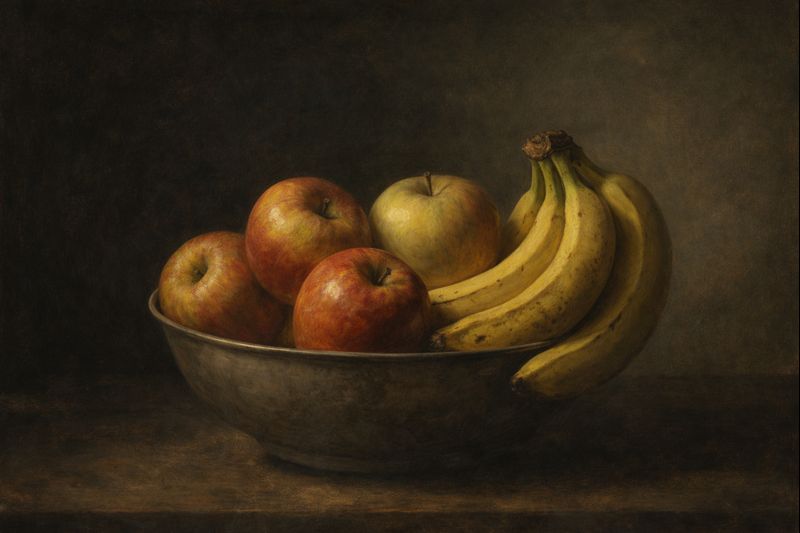
Now imagine that one tree in particular thrives. It’s lush and tropical, with enormous green, plume‑like leaves. Its fruit grows in large clusters of yellow crescents. Looking at it makes me think of islands. And monkeys. Lots of monkeys.
If I were to call this tree a banana tree, today’s society might accuse me of judging it. And goodness knows, a sizeable portion of society—often those who pride themselves on being especially clever—are very fond of reminding us that we shouldn’t judge.
Their favorite proof text is a Bible verse plucked so enthusiastically from its context that it nearly bleeds: “Judge not.” Case closed, they think—righteousness achieved.
Except that’s not actually where the passage ends.
The very next verse explains that whatever standard you use to judge others will be the standard used to judge you. It goes on to advise a careful inspection of one’s own shortcomings before attempting to address someone else’s. In short: get your ducks in a row before you start wrangling other people’s hens and drakes.
If we’re determined to bring Scripture into the conversation, it might also be worth considering the words of Jesus elsewhere—where He explicitly instructs us to judge, but to do so fairly and with discernment. Curiously, those verses tend to fall by the wayside for those convinced that any form of judgment is an unforgivable offense.
Most often, the “judge not” argument appears the moment someone disagrees. Yet discernment—careful, honest evaluation—is not only reasonable, it’s necessary. Saying something is wrong isn’t judgmental; it’s evaluative.
Let’s return to our tree. I observe the fruit, assess the evidence, and conclude that it’s a banana tree. I’m not being cruel. I’m using discernment. And if that tree insists it’s an apple tree, I’m not judging it harshly by disagreeing—I’m responding to what I can plainly see.
A portion of the public would argue that if the tree feels like an apple tree, then it can be one. Which sounds lovely until someone takes a confident bite, expecting crispness, and instead encounters mush beneath a leathery peel.
We do this kind of evaluation constantly. We decide what clothes we like, what food we enjoy, and what sort of person we hope to build a life with. Are we being unfairly judgmental because we don’t want to date the very first human we encounter?
Ask your local social justice warrior and—yes—you were terribly judgmental, and you ought to be ashamed. The audacity of looking at a person or situation and deciding whether it is true, good, or right.
So the next time you crack an egg for breakfast, consider this. If that perfectly ordinary shell opens to reveal a black‑green, foul‑smelling interior, ask yourself whether making a judgment about proceeding with your meal is wise.
I don’t know. Seems like an easy decision to me.
But then again… who am I to judge?
 Prose and Possibilities
So so true, TRUTH!
LikeLiked by 2 people